
Press Conference
JAMA Holds First Press Conference Under Its New Leadership
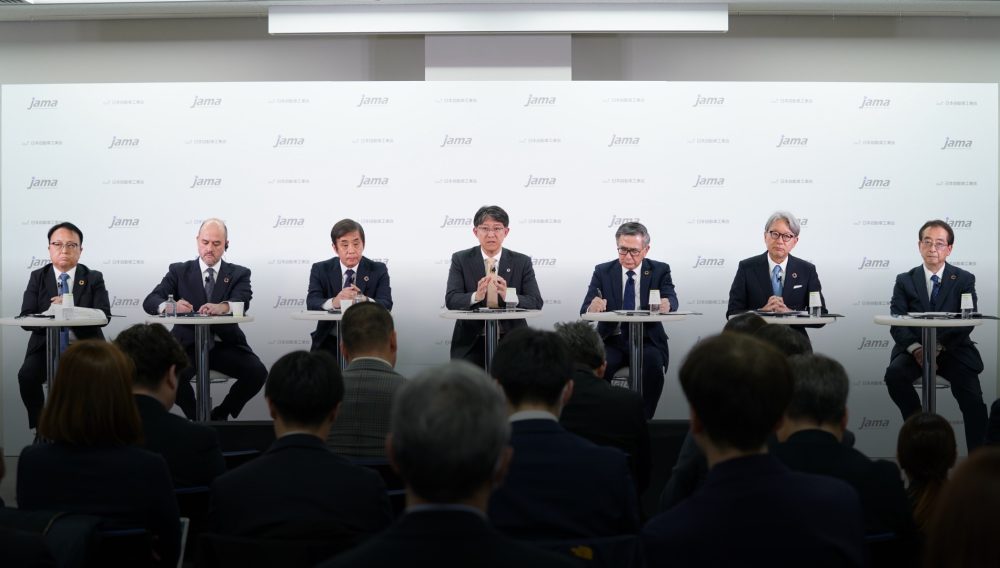
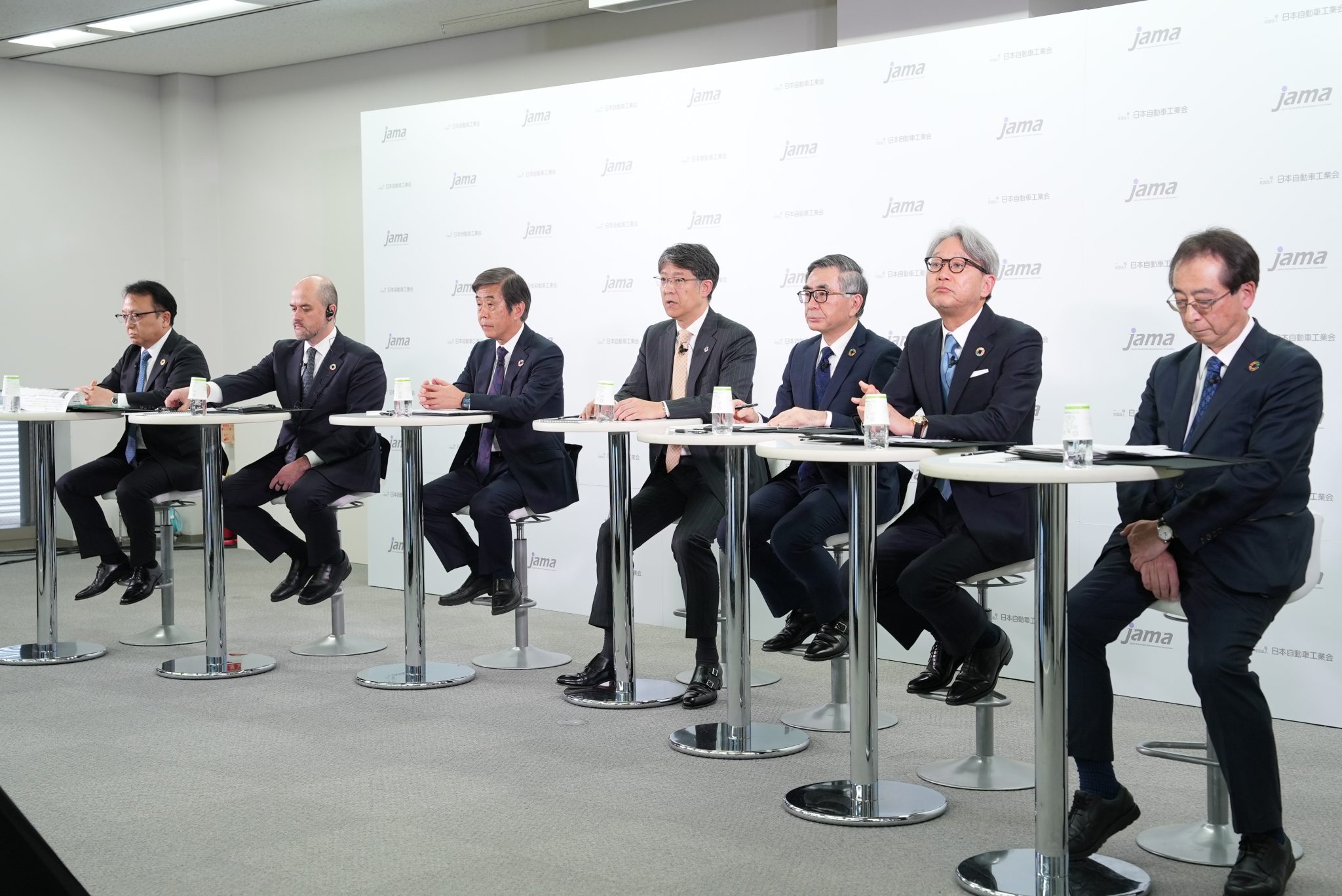
On March 19, JAMA held its first press conference under its new leadership structure. Seven senior officers, including the Chairman and the six Vice Chairmen, appeared before a large number of journalists attending both in person and online. Chairman Koji Sato opened the session by outlining the aspirations for—and the progress made so far on—its so-called New Seven Priority Challenges. (See summary below.)
During the Q&A session, Vice Chairmen Toshihiro Suzuki and Toshihiro Mibe commented on the progress and issues related to the seven challenges. (See summaries below.) Reporters posed questions on a wide range of subjects, including geopolitical risks affecting supply chains amid global instability, and efforts to strengthen the industry’s human resources foundation.
Full Archive of Press Conference
The original Seven Priority Challenges, inherited from the tenure of former JAMA President Masanori Katayama, were reassessed in January 2026 in response to the rapid changes affecting the global automotive industry and the international environment surrounding it. JAMA subsequently relaunched its efforts under the “New Seven Priority Challenges” designation.
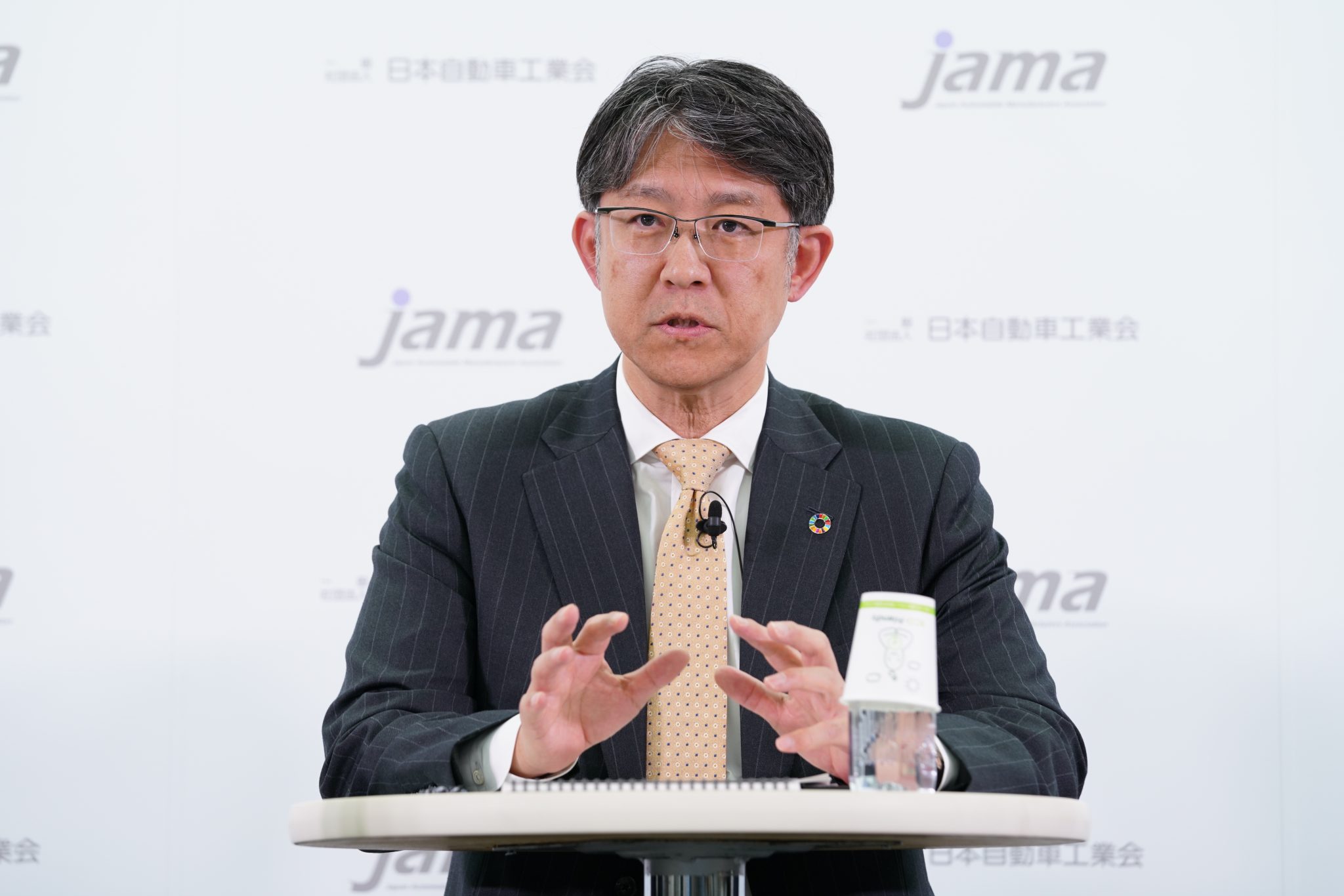
SATO Koji, Chairman
(President, Member of the Board of Directors, Toyota Motor Corporation)
- Historically, Japan’s automotive industry has tackled issues such as environmental measures, safety, and technological innovation through the individual efforts of member companies — often responding in a rather reactive manner.
- However, the industry is now facing simultaneous challenges that cannot be solved by any single company alone: decarbonization, rising geopolitical risks, resource and energy constraints, and changes in workforce structure.
- The growing geopolitical risks — including the situation in the Middle East — have made it increasingly important to enhance resilience against uncertainties in energy supply and supply chains.
- Another topic highlighted during this year’s spring labor negotiations was the need to reinforce the industry’s overall competitiveness.
- Maintaining and strengthening the international competitiveness of Japan’s automotive industry is precisely the overarching aim of the New Seven Priority Challenges.
- There are three guiding principles shared across all efforts related to the New Seven Priority Challenges:
- The first is co-creation beyond the industry. Many of the issues cannot be solved within the automotive industry alone. It is essential to pursue “co-creation” — working together across industries. From this perspective, the goal is not simply to advance the automotive industry but to contribute to society by clarifying the role the industry can play and the kind of society it can help realize.
- The second is the need to focus on societal implementation. The final objective of each initiative is real-world implementation. The goal is to carry large-scale themes all the way through to tangible deployment in society.
- Finally, leveraging diversity as a strength: JAMA, which comprises 14 companies engaged in a wide range of mobility domains, is a uniquely capable organization where diverse companies can work together towards a common purpose. This collective energy is a driving force that will help shape the path to success for Japan’s mobility and automotive industries.
- Based on these three principles, JAMA intends to advance efforts related to the seven challenges with a strong sense of urgency.
- As these are new initiatives, progress will not always be straightforward, and resolving issues may be difficult. However, by sharing not only the outcomes but also the process itself with a sense of immediacy, JAMA hopes to convey the industry’s passion and commitment in real time and work together with society to promote practical implementations that will support a prosperous mobility future.
During the press conference, when reporters asked about the progress on initiatives related to the seven challenges, responses were provided by Vice Chairman Suzuki (Suzuki Motor Corporation) and Vice Chairman Mibe (Honda Motor Co., Ltd.).
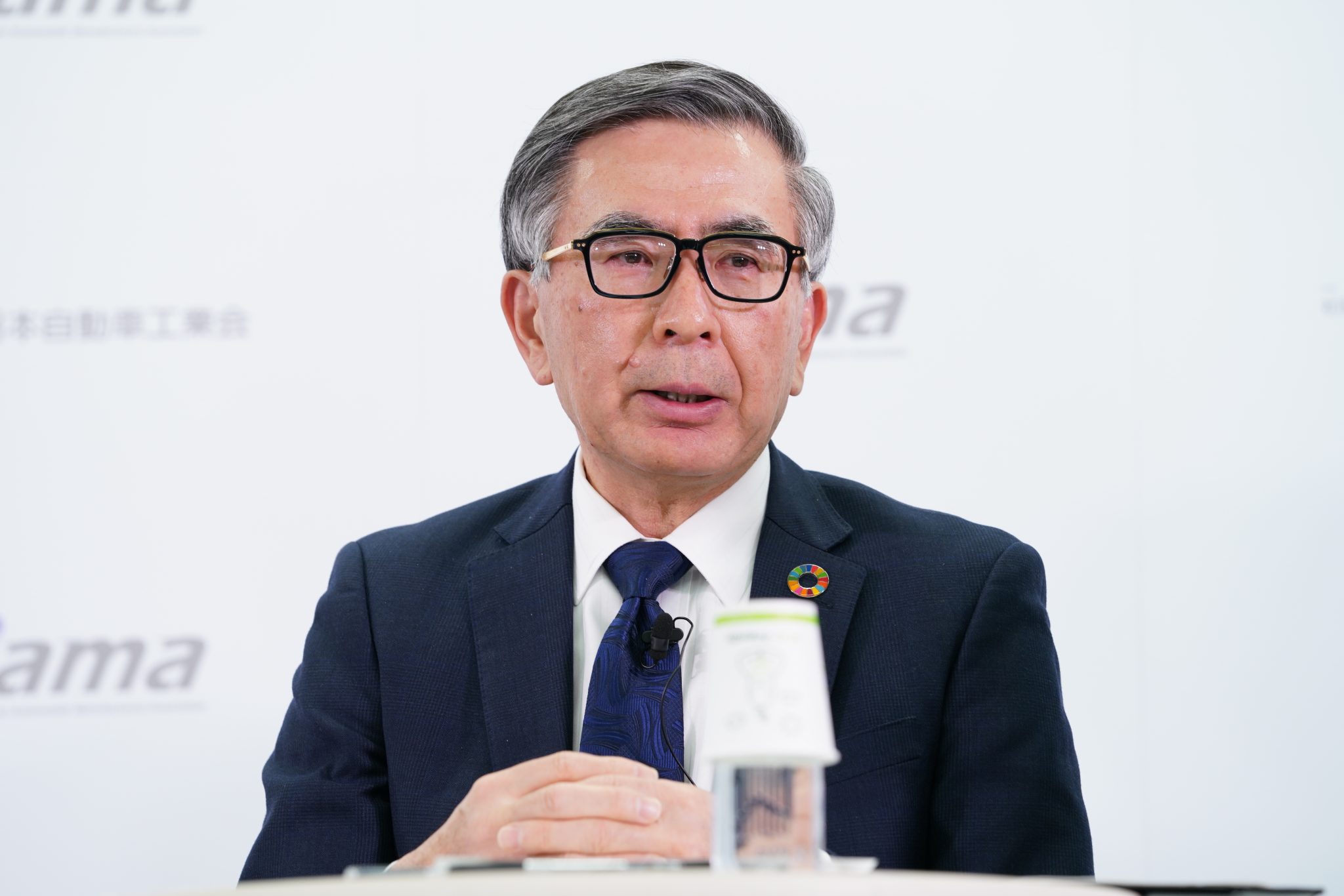
SUZUKI Toshihiro, Vice Chairman
(Representative Director and President, Suzuki Motor Corporation)
- In the past, discussions within JAMA tended to focus on how JAMA itself should move forward. However, as we advanced our initiatives, we began to engage other industries as well, making it possible to hold broader, cross-industry discussions. By speaking not only from JAMA’s perspective but also engaging in thorough dialogue with related sectors — such as the petroleum industry on clean energy issues — we were able to deepen mutual understanding.
- One significant achievement, in my view, is that these conversations have led to concrete discussions on what kinds of initiatives are truly effective in promoting the wider adoption of clean energy.
- With regard to the New Seven Priority Challenges, we recognize that they include large, medium, and smaller-scale themes. If we advance these efforts not only within JAMA but also by involving related industries and working closely with the government, I believe we can identify clear pathways towards solutions. Through these efforts, I have felt a strong sense of progress and the potential to move forward even further.
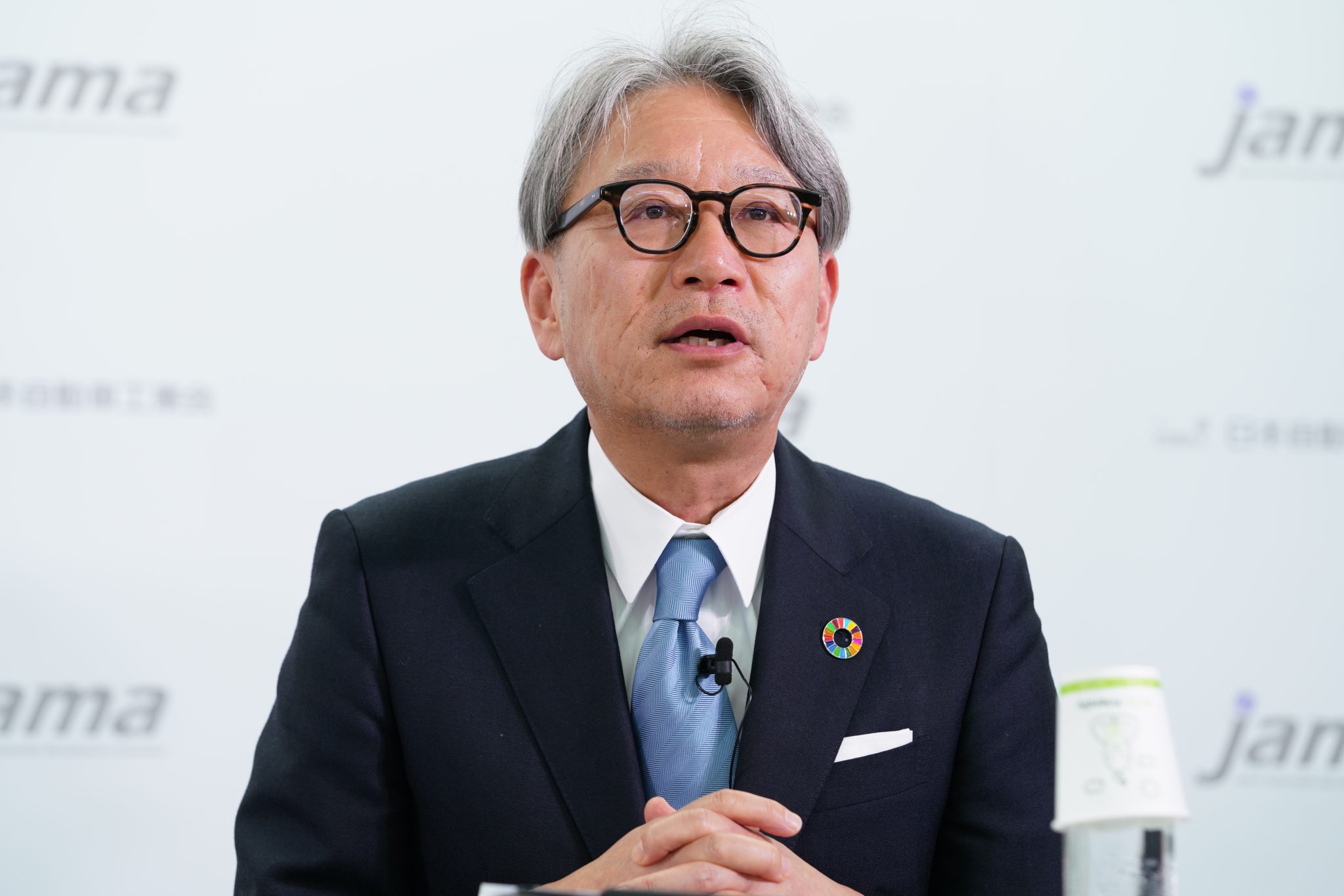
MIBE Toshihiro, Vice Chairman
(Director, President and Representative Executive Officer, Honda Motor Co., Ltd.)
- In terms of the global competitive environment, we are fully aware that Japan’s automotive industry is operating on the edge — facing intensifying competition every single day.
- The key to survival will be how quickly we can advance initiatives in the areas where collaboration is essential.
- At the same time, when we look back, the structure of our industry has long been vertically segmented: automakers at the top and suppliers under them, a hierarchy built over decades. Within such a context, the traditional approaches to competition and collaboration are no longer sufficient. We are now actively discussing the need to break away from these historical structures, because without doing so, new competitiveness cannot emerge. To be candid, this remains one of our greatest challenges.
- Also today, JAMA’s board members held a meeting in which they engaged in extensive discussions on these issues. At this point, I believe our understanding of the challenges is almost fully aligned. As we continue organizing our efforts under the framework of the seven challenges, we must execute them with a strong sense of urgency—because without speed, we will not be able to maintain global competitiveness. Under the new leadership structure, we intend to move forward decisively and ensure that Japan’s automotive industry as a whole secures its competitive standing in the global market.
We appreciate your continued attention to the progress of initiatives related to the New Seven Priority Challenges, which are essential to strengthening the international competitiveness of Japan’s automotive industry.
For press conference-related materials, click here.
*****
