
Press Conference
JAMA Press Conference May 2026
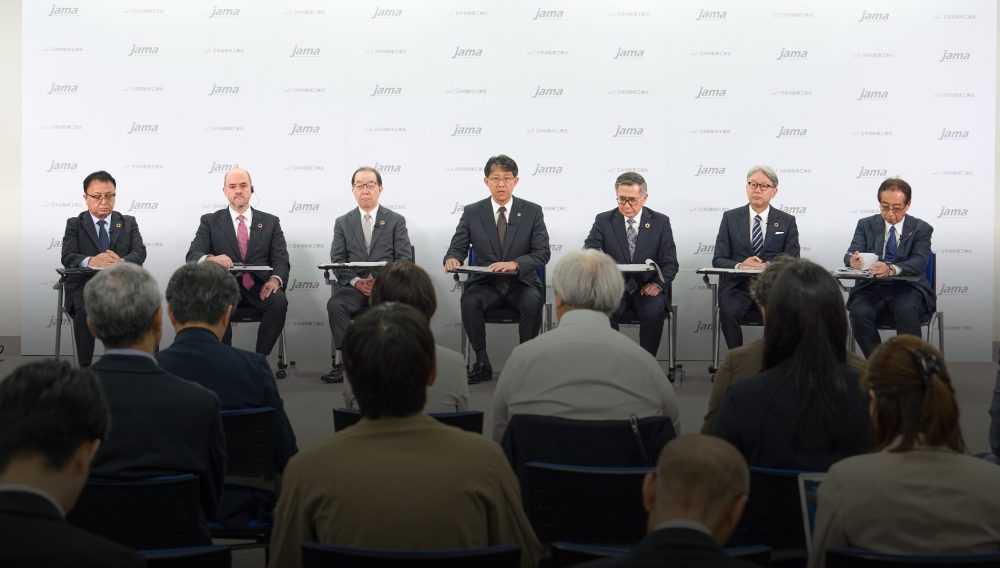
The Japan Automobile Manufacturers Association (JAMA) held a press conference on May 21, 2026.
The conference was conducted in two parts. In the introductory session, representatives in charge reported on developments in the areas of hydrogen, logistics, and the automotive industry labor calendar and their relevance to the so-called New Seven Priority Challenges facing the industry.
In the second session, seven senior officers, including JAMA’s Chairman and its six Vice-Chairmen, took the stage. Chairman Koji Sato provided an update on the actions being taken to address the New Seven Priority Challenges as well as a brief overview of Japan Mobility Show Bizweek 2026.
JAMA looks forward to the further advancement of these initiatives, which aim to strengthen the international competitiveness of Japan’s automotive industry.
Full Archive of Press Conference
Speakers in the first session conveyed information on developments in three Priority Challenges-related areas, as summarized below.
Hydrogen Trucks for Long-Haul Transport
(Re Priority Challenge 2: Implementing a multi-pathway approach to achieving carbon neutrality)
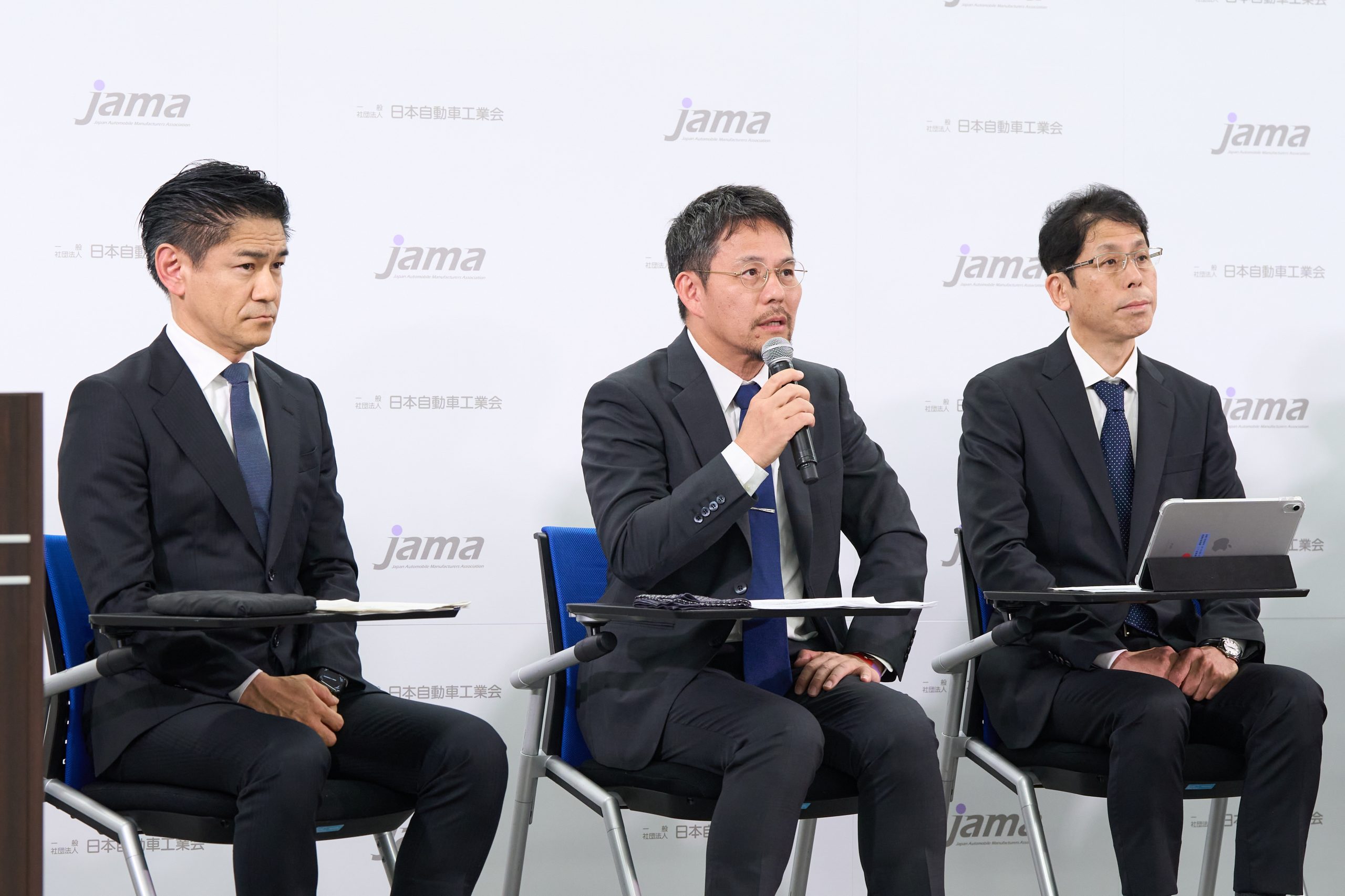
From left: Takanori KIMATA (Toyota Motor, Task Force Corporate Leader); Hironobu ANDO (Fuso Truck & Bus, Task Force Corporate Subleader); Koichi OHATA (Hino Motors, Task Force Corporate Subleader)
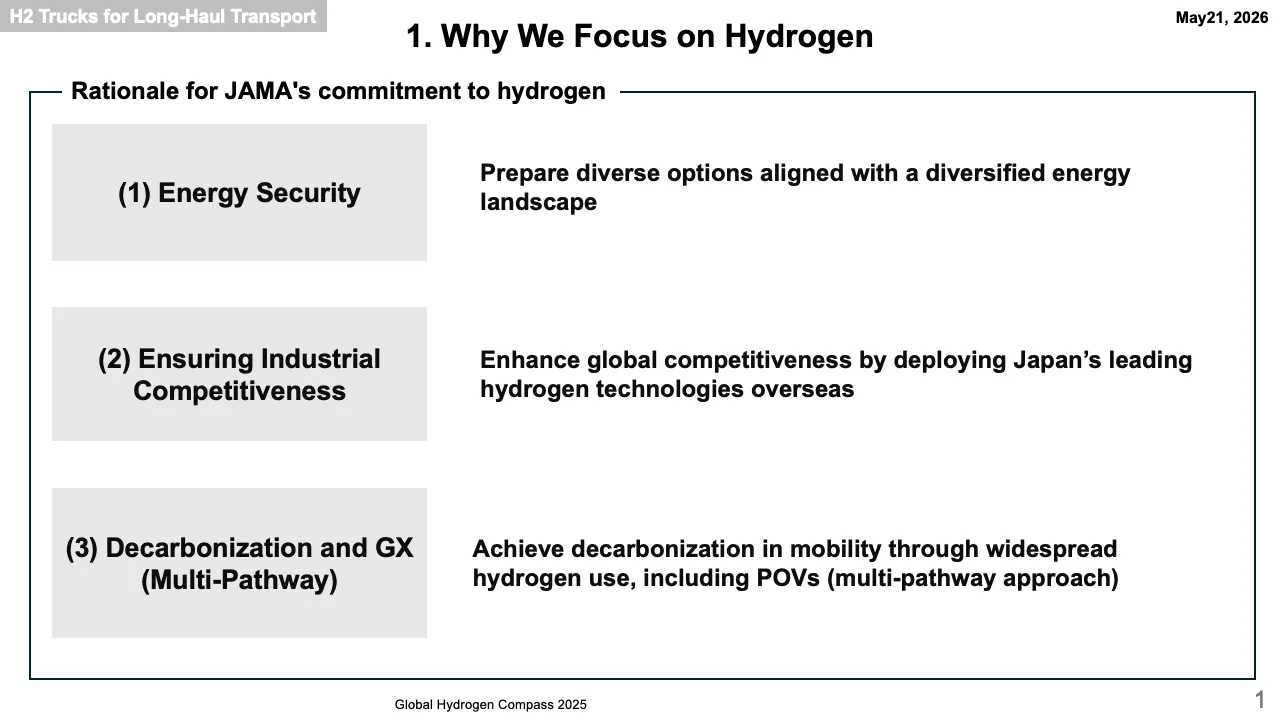
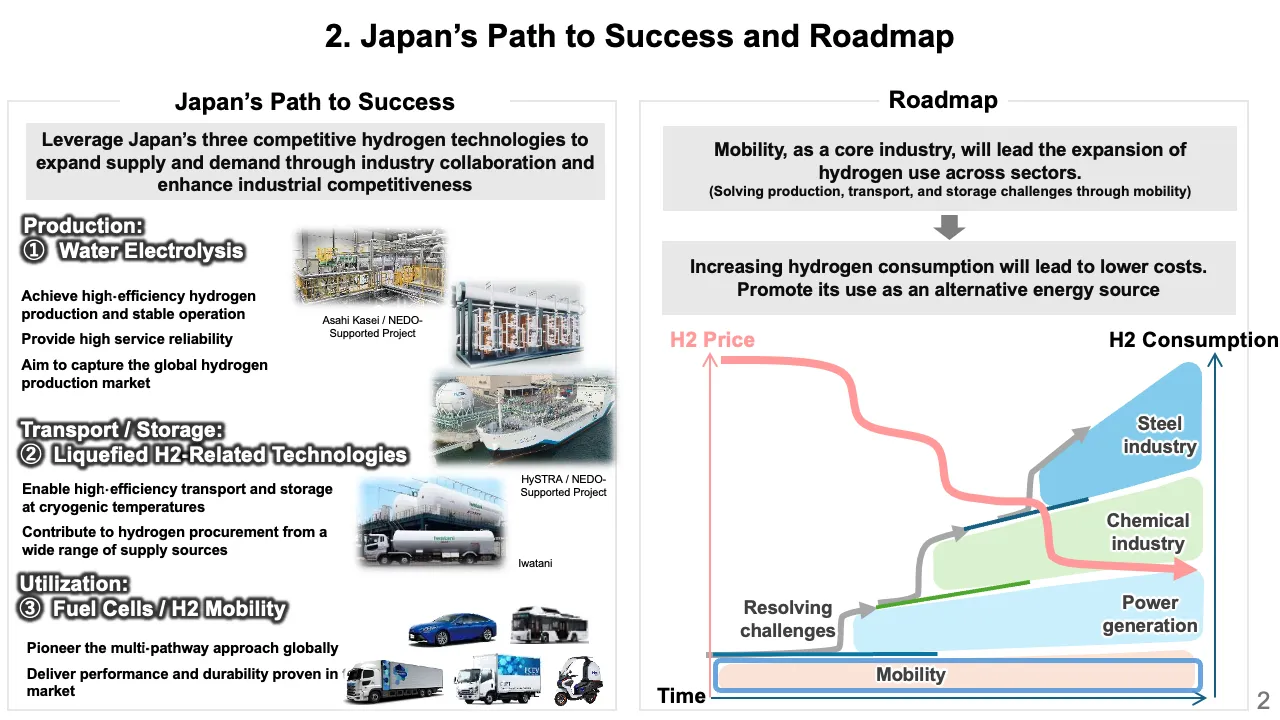
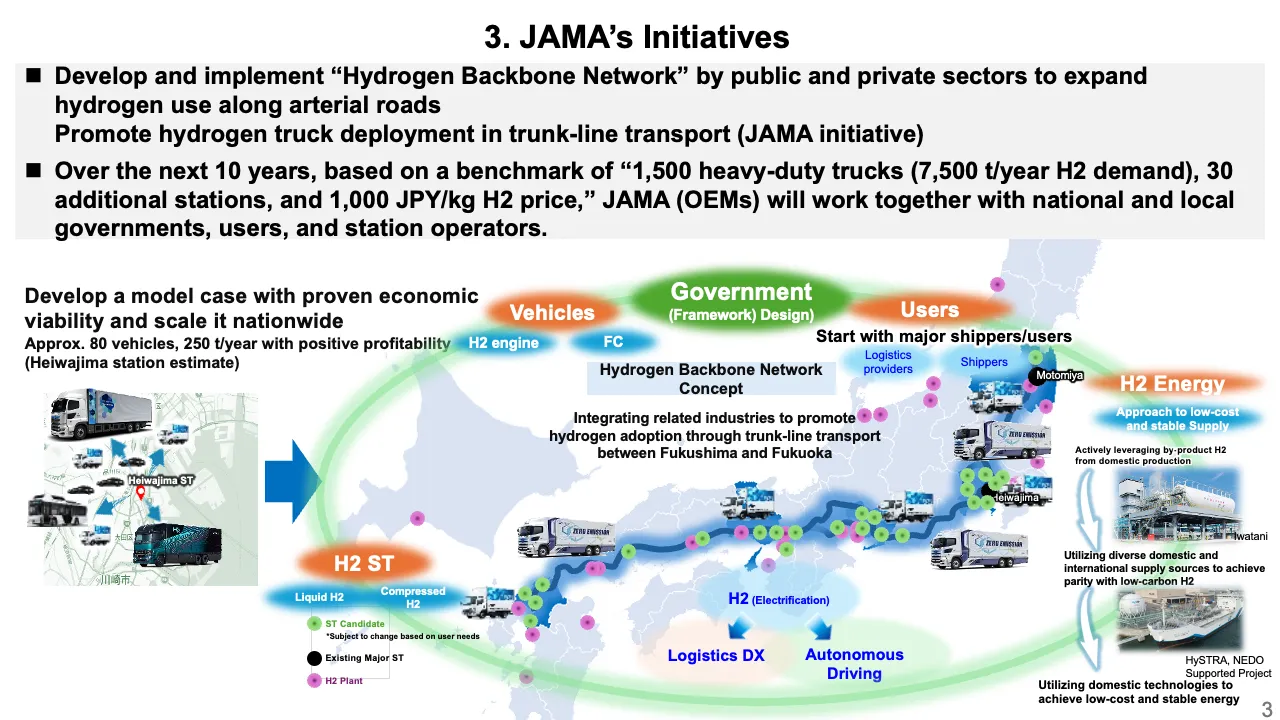
- Japan’s competitive advantage lies in leveraging its strengths in three key hydrogen-related technologies—production, transportation and storage, and utilization—to expand hydrogen demand through industry collaboration and strengthen industrial competitiveness.
- According to the project’s roadmap, the mobility sector will take the lead in addressing challenges across production, transportation/storage and utilization while expanding hydrogen consumption. Increased hydrogen demand is expected to contribute to cost reductions and promote its use as an alternative energy source in other industries.
- To realize a hydrogen-based society, JAMA will develop and implement a “Hydrogen Backbone Network” in collaboration with public and private stakeholders, aiming to expand hydrogen use in long-haul transportation. Specifically, over the next ten years, JAMA will work with the government, local authorities, users, and station operators to advance initiatives based on targets of approximately 1,500 heavy-duty trucks, 30 hydrogen stations, and a hydrogen price of around 1,000 yen per kilogram. By developing a unit cost model based on economic viability—referred to as a “small success”—these efforts will be expanded along the main transport corridor from Fukushima to Fukuoka.
Standardized Platform for Shared Logistics
(Re Priority Challenge 7: Enhancing competitiveness across the entire supply chain)
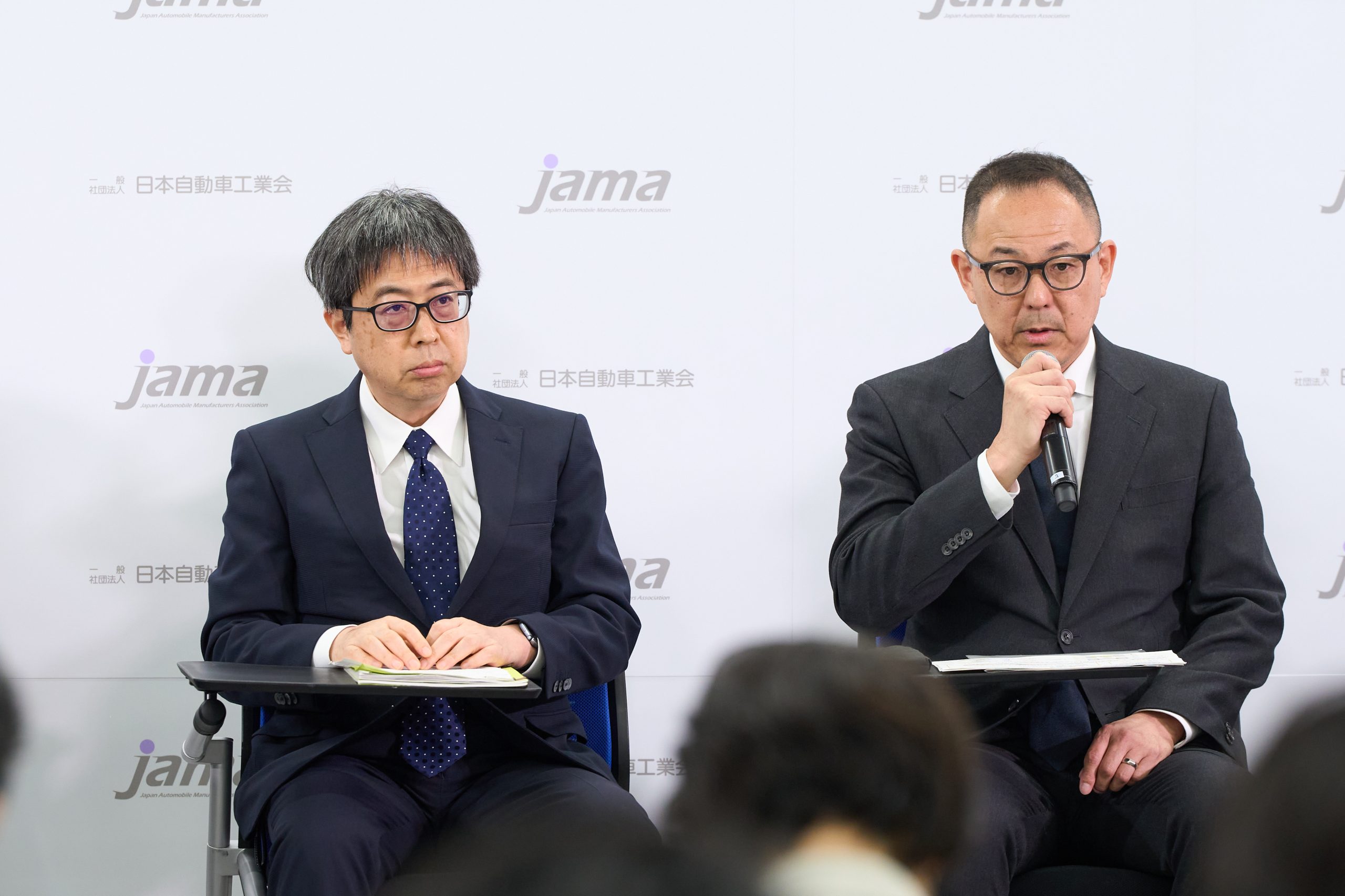
From left: Takehito NAGANO, Chair, Logistics Subcommittee (Honda Motor) and Teruo YOSHIDA, Vice-Chair, Logistics Subcommittee (Toyota Motor)
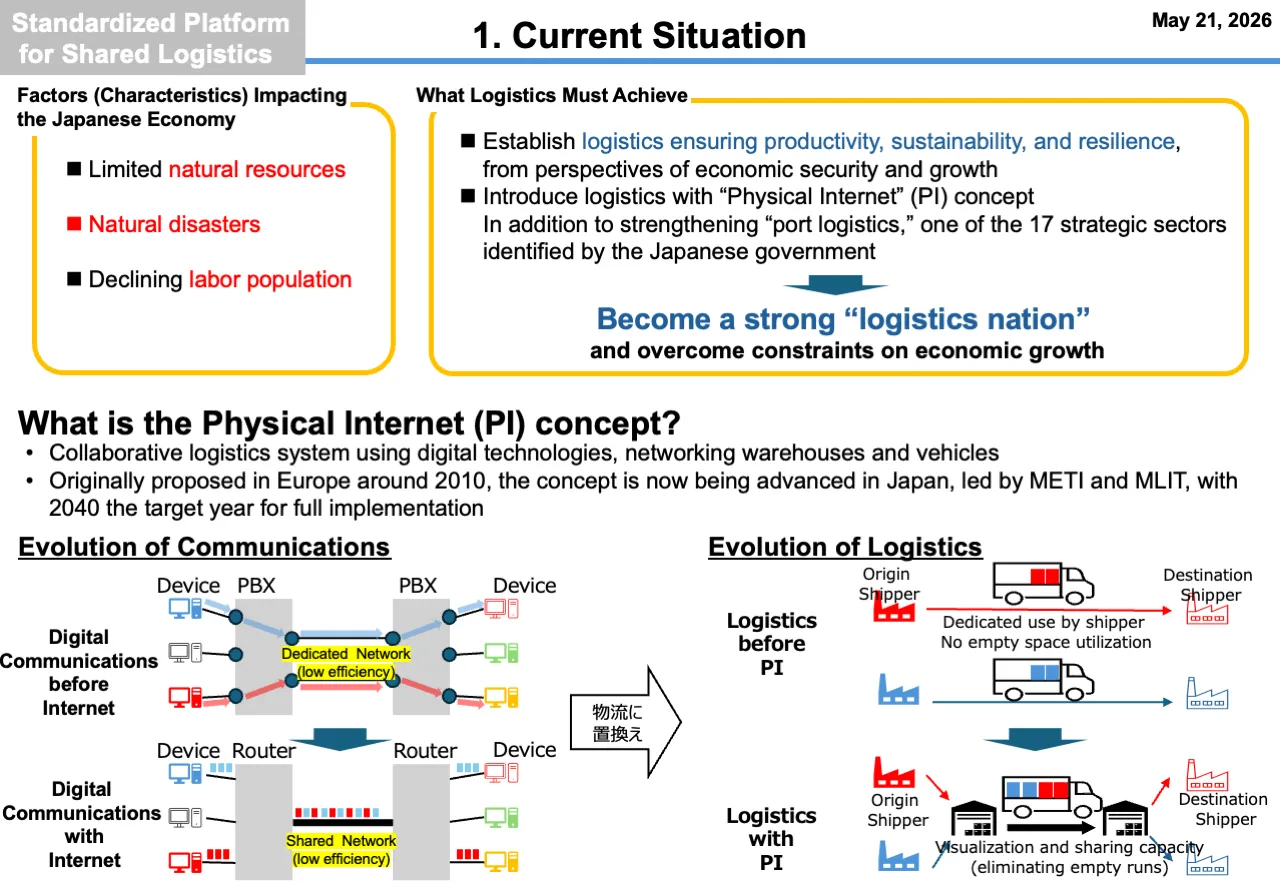
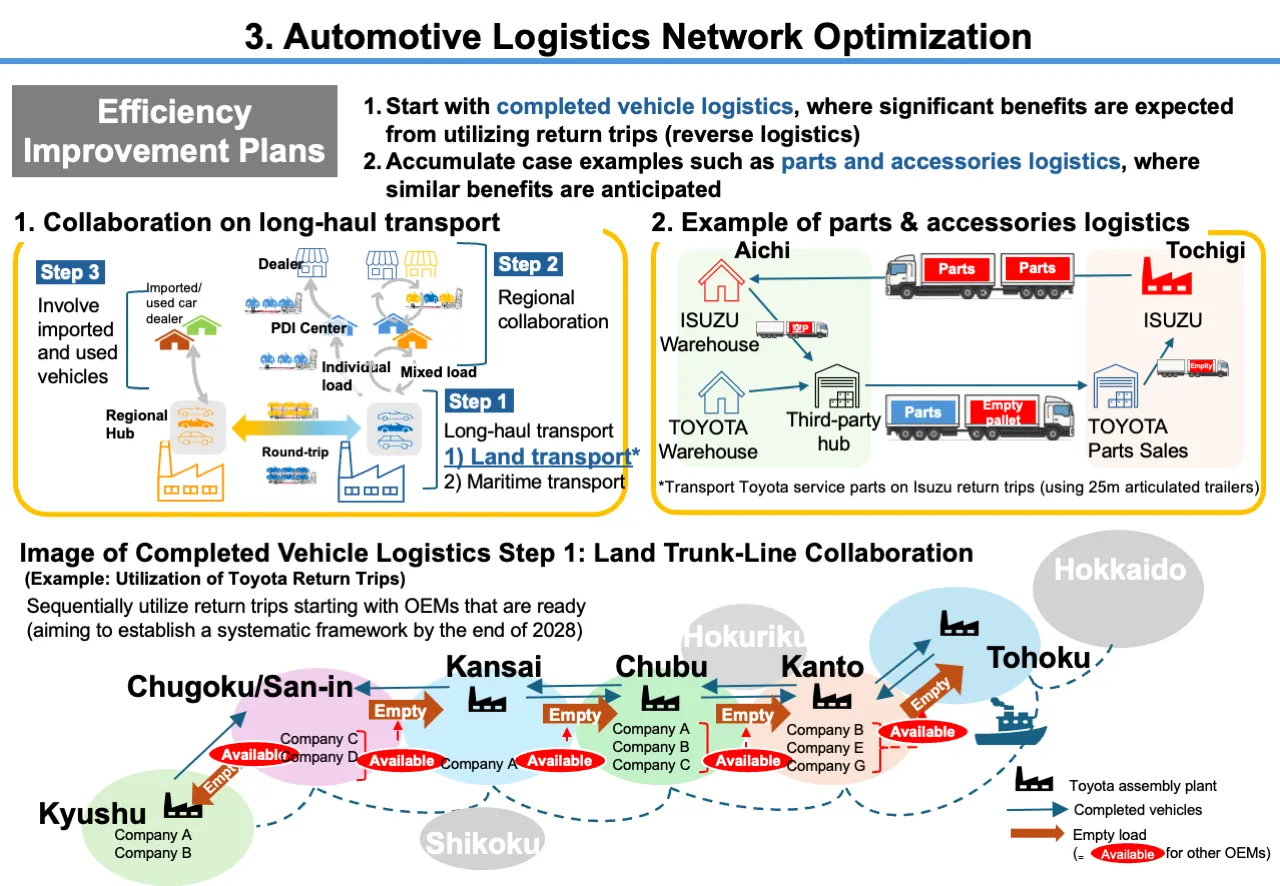
- Addressing the ongoing driver shortage is an unavoidable challenge. In addition, OEM leaders share a common vision of realizing “strong logistics,” as envisioned by the government’s Physical Internet initiative, and positioning Japan as a leading logistics nation that supports economic growth.
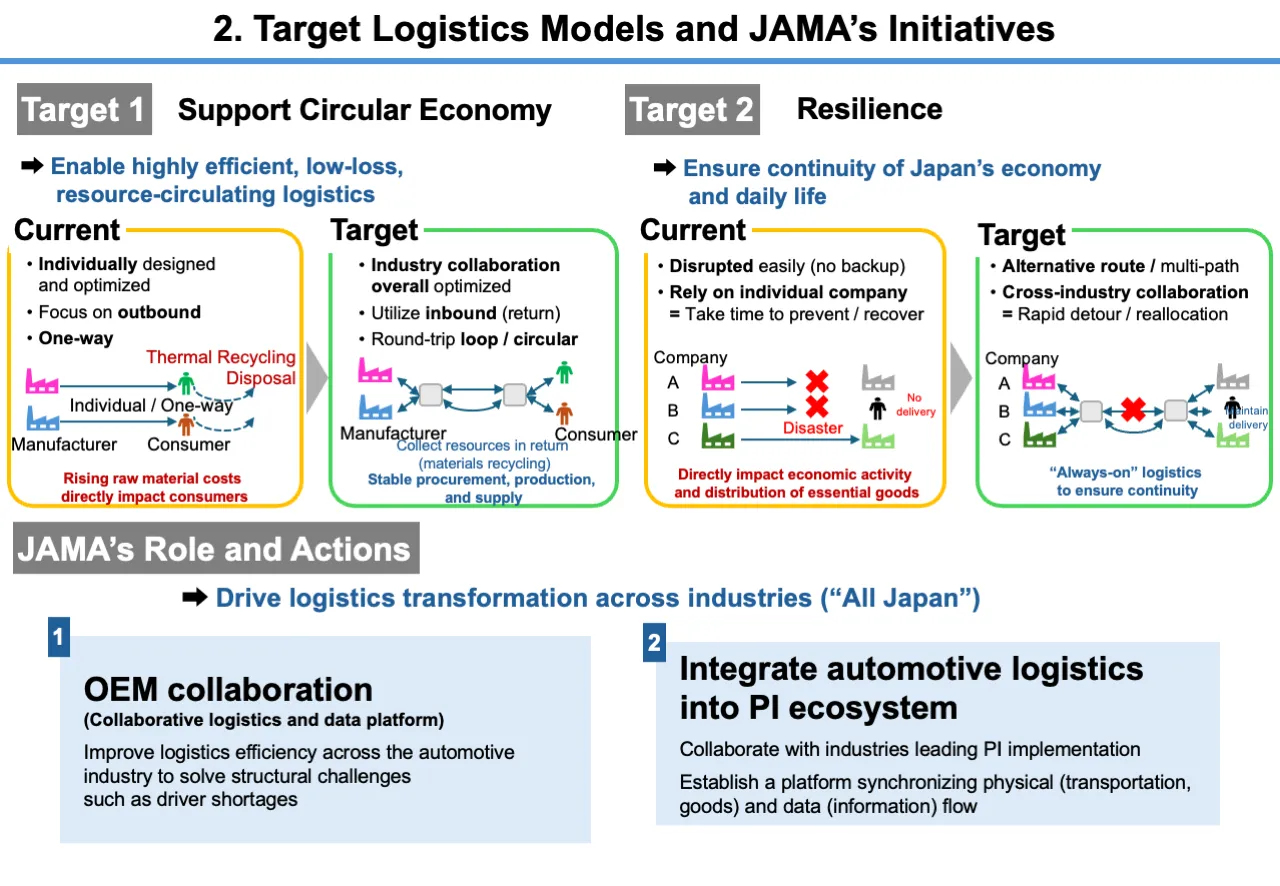
- In a resource-scarce country like Japan, geopolitical risks and rising raw material costs can have a direct impact on the economy and consumers. We believe this structural challenge can be addressed through cross-industry collaboration. By utilizing underused return logistics as forward logistics for other parties, a round-trip loop and a circular logistics system can be established, contributing to stable procurement of materials and stable product supply.
- Given Japan’s high exposure to natural disasters, there is a significant risk that disruptions in logistics could lead to dysfunction in the economy and daily life activities. Collaborative logistics can strengthen and add redundancy to the logistics network. By sharing and visualizing data, it becomes possible to reroute and reallocate resources quickly and in real time. Expanding such flexible logistics options is essential, especially in times of emergency.
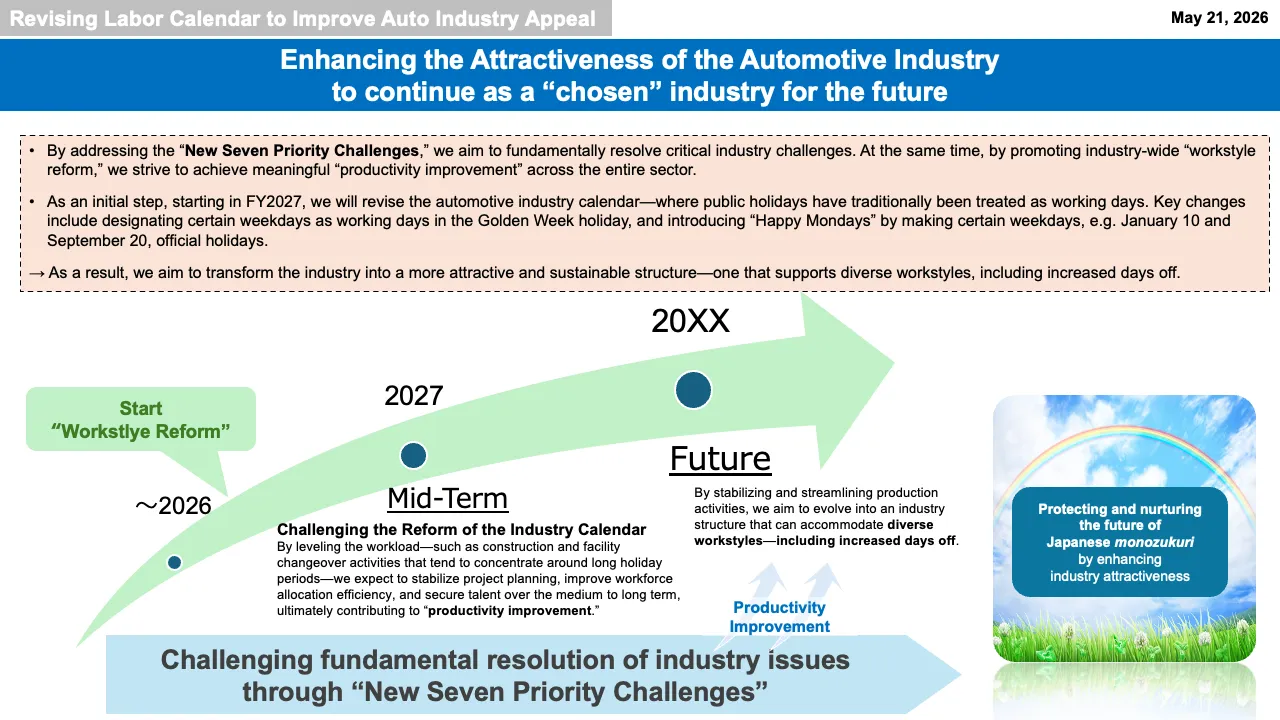
Revising the Labor Calendar to Enhance the Attractiveness of the Auto Industry
(Re Priority Challenge 4: Strengthening human resource foundations)
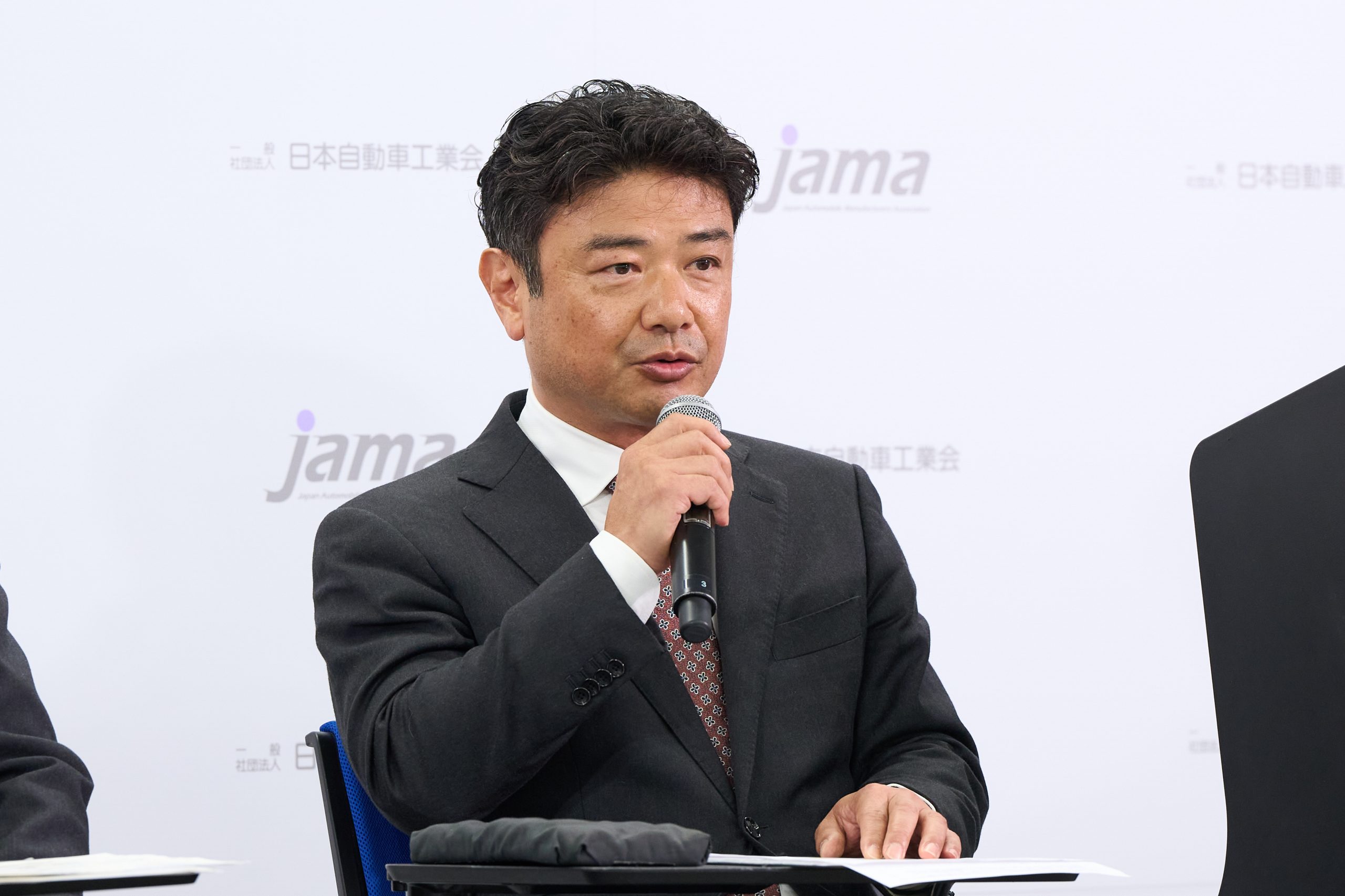
Hiroyuki SUKEGAWA, Chair, Human Resources Subcommittee (Honda Motor)
- As a first step towards improving productivity and promoting workstyle reform in the automotive industry, adjustments are being made to review the industry calendar in alignment with national holidays. Specifically, from fiscal 2027, the automotive calendar—which currently designates some public holidays as working days—will be revised, including making weekdays during Golden Week working days and designating certain holidays that fall on Mondays as non-working days.
- As one of Japan’s core industries, the automotive industry must enhance its overall attractiveness and evolve into an industry that will continue to be “chosen” in the future. To achieve this, it is necessary not only to address fundamental issues facing the industry through initiatives related to the New Seven Priority Challenges, but also to promote workstyle reform across the entire industry to achieve improvements in overall productivity.
- In terms of workstyle reform, in response to societal changes such as the shifting needs of workers and the diversification of values, the automotive industry aims to begin creating and offering more diverse working styles. As a first step, in fiscal 2027 efforts will be made to level out the workload in construction, equipment maintenance and switching operations that have until now been concentrated around the Golden Week holiday period. This levelling out is expected to contribute to more stable project planning for partner companies involved in construction and equipment work, more efficient personnel allocation, and improved mid- to long-term workforce development and retention.
- Regarding the calendar revision, discussions have been held repeatedly with the Japan Automobile Workers’ Union, confirming the need to carefully consider the impact on all relevant stakeholders. Going forward, efforts will be made to promote understanding through consultations with related organizations.
At the start of the second session, Chairman Koji Sato delivered remarks on initiatives to address the New Seven Priority Challenges.
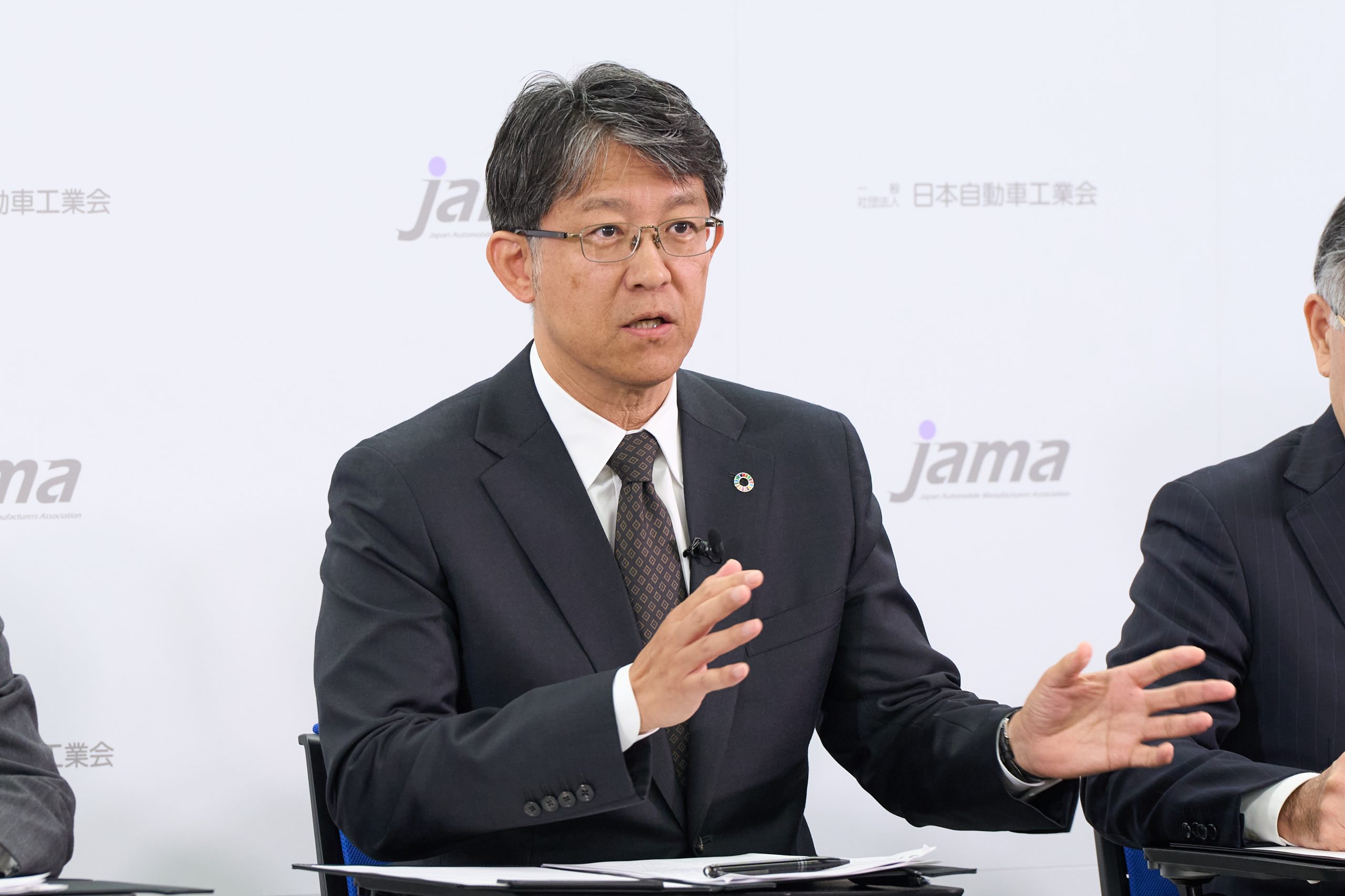
Koji SATO, Chairman (Vice-Chairman of the Board of Directors, Toyota Motor)
- Amid an increasingly challenging environment surrounding the automotive industry, including geopolitical developments in the Middle East, it is essential for the industry to maintain stable supply, secure robust supply chains, prepare solutions for diversified energy needs, and establish pathways for effective resource utilization from a broader strategic perspective.
- With a clear commitment to fostering areas for collaboration, JAMA is advancing efforts to address the New Seven Priority Challenges, placing emphasis on action rather than repeated discussion. While keeping in mind the broader vision of what Japan’s mobility should be, these efforts will be translated into concrete initiatives.
- The theme of this year’s Japan Mobility Show Bizweek is “Your move moves the world.” Through collaboration with startups, the event will serve as a platform for multifaceted discussions on practical approaches to implementing the New Seven Priority Challenges.
- Across all activities, JAMA will emphasize taking action and responding with a strong sense of speed as it continues to move these initiatives forward.
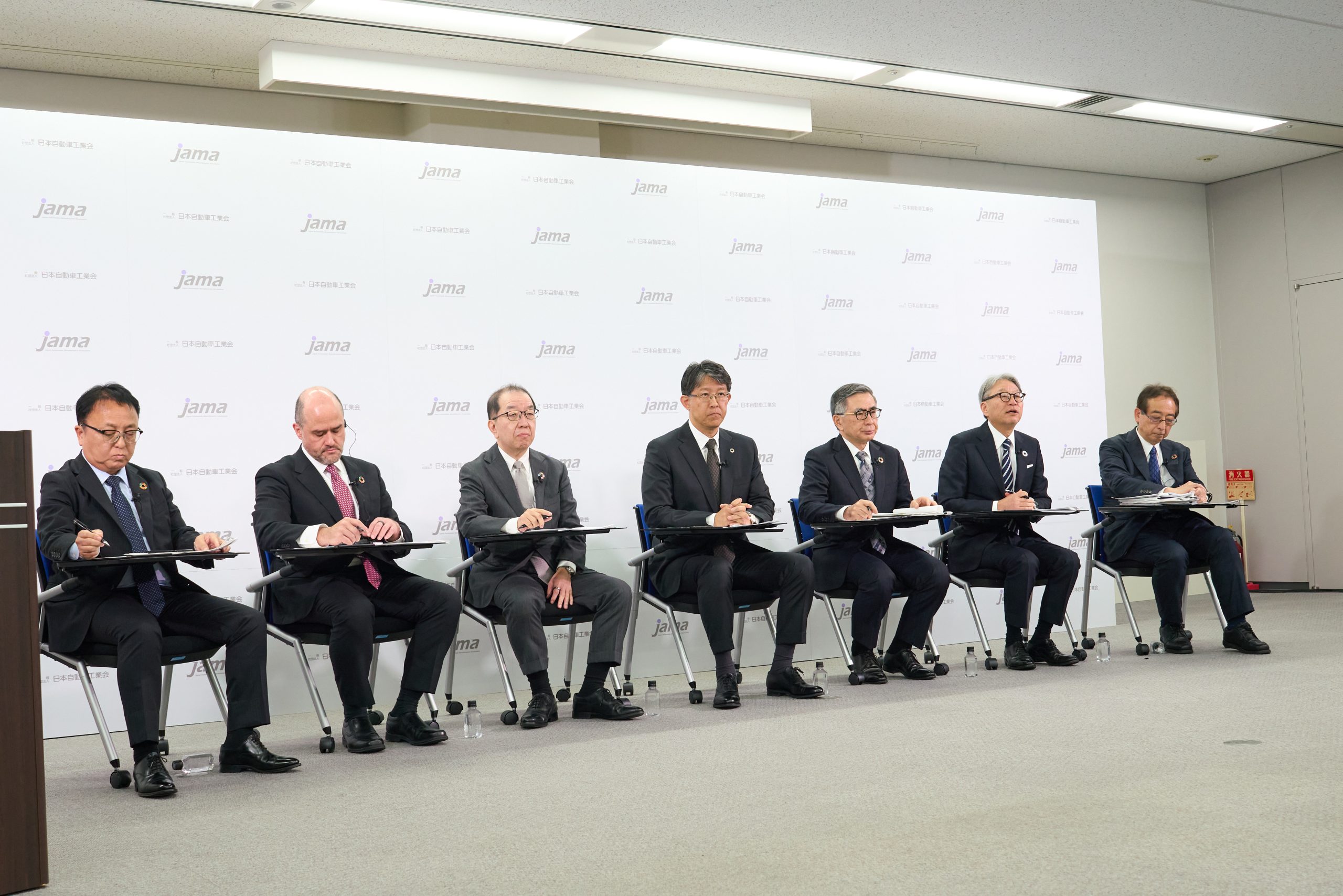
JAMA’s Chairman and six Vice-Chairmen at the May 21 press conference
